Garage Door Openers Explained: Types, Components, and How Different Setups Compare
Garage door openers might seem like they're fairly interchangeable from one model to the next, but they are not. The right opener depends on the door’s size, weight, construction, headroom, cycle demands, noise tolerance, and the homeowner’s expectations around convenience and safety. A well-selected opener should match the door system, not just the opening size or a marketing label on the box.
For homeowners comparing options, the most useful way to think about garage door openers is by separating three things: the drive style, the motor type, and the mounting configuration. Once those are understood, smart features such as Wi-Fi control, battery backup, and app integration become easier to evaluate in the right context.
Table of Contents
What a Garage Door Opener Actually Does
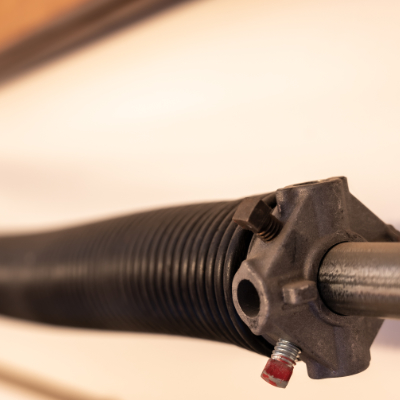
A garage door opener does not do all of the lifting by itself. On a properly installed sectional garage door, the torsion or extension spring system counterbalances most of the door’s weight. The opener’s job is to guide and control movement, start and stop the cycle cleanly, and provide secure latching force when the door is closed.
That distinction matters. If a door is heavy, poorly balanced, or binding in the tracks, a larger opener is not the correct fix. Oversizing the operator can mask a door problem temporarily, but it does not solve spring balance, friction, worn rollers, or track alignment issues. The opener should be matched to a healthy door system first.
The major components of a garage door opener system
Most residential opener systems include the same core parts:
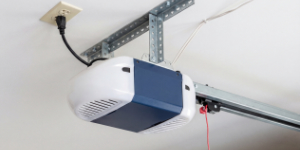
Motor unit
This is the powerhead that contains the motor, logic board, light controls, and in many models the radio receiver for remotes and wireless accessories.

Mounting bracket and hanging hardware
These anchor the opener to the structure of the garage and are critical for proper alignment and long-term stability.

Rail and trolley
The rail guides the trolley forward and backward. The trolley connects to the door arm, which pushes or pulls the top section of the door during operation.
Drive system
This is the mechanism that transfers the opener’s power to the door. In overhead trolley systems, that usually means a chain, belt, or screw drive moving a carriage along a rail.
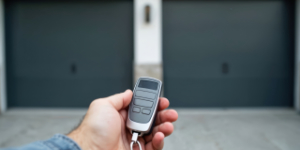
Wall control and remote system
This includes the hardwired control station, handheld remotes, keypad entry, and increasingly the app-based control platform.

Emergency release
This allows the opener to be disengaged so the door can be operated manually during a power outage or service condition.
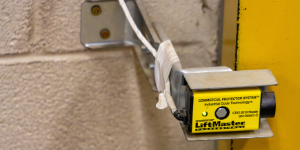
Safety reversing sensors
Mounted near the bottom of the door opening, these photo-eyes stop and reverse the door if the beam is interrupted.
Opener Safety Tip
Test the safety reversing system monthly by placing a 2x4 or similar object under the door. The door should reverse on contact and whenever the photo-eye beam is broken.Chain Drive vs Belt Drive
For most homeowners, this is the first major comparison.
Chain drive openers
Chain drives use a metal chain to move the trolley. They are durable, proven, and generally cost-effective. They tend to perform well on standard steel doors and are often chosen where budget matters more than sound reduction.
The tradeoff is noise and vibration. Even a good chain drive typically produces more mechanical sound than a comparable belt drive. In a detached garage, that may not matter much. In an attached garage below a bedroom or beside living space, it often does.
Belt drive openers
Belt drives use a reinforced rubber, polyurethane, or similar synthetic belt instead of a chain. Their main advantage is smoother and quieter operation. They are often the better choice for homes where noise transmission is a concern.
Modern belt-drive systems are also widely paired with DC motors and smart features, making them common in premium residential installations. The drawback is usually cost rather than performance. For many homes, belt drive is the best all-around balance of refinement and capability.
| Drive Type | Typical Strengths | Common Tradeoffs |
|---|---|---|
| Chain Drive | Durable, proven, usually lower cost, good for standard steel doors and detached garages. | More noise and vibration, less ideal under bedrooms or near living spaces. |
| Belt Drive | Very quiet and smooth, often paired with DC motors and smart features, great for attached garages. | Higher upfront cost than comparable chain-drive units. |
AC vs DC Motors
Motor type is another area where homeowners often see confusing marketing.
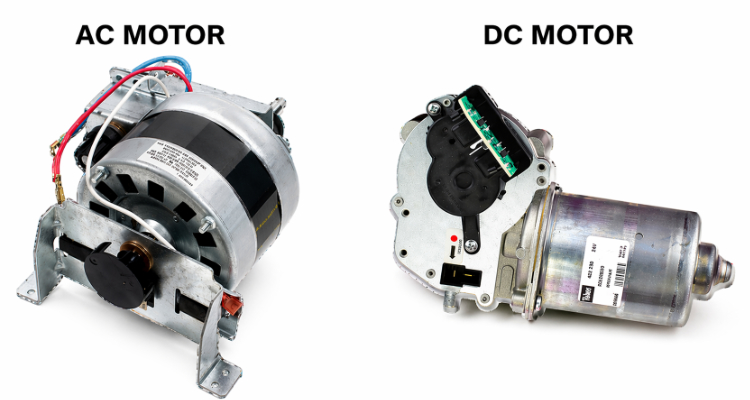
AC Motors
AC openers have been common for decades. They are known for straightforward operation, solid durability, and a more traditional design. In many cases, they are paired with chain-drive systems. They can be very reliable, but they are usually louder and less refined in how they start and stop.
DC Motors
DC openers are typically quieter and allow for soft start and soft stop programming, which reduces abrupt movement and can lessen wear on the system. They are also commonly used in opener platforms that include Wi-Fi connectivity, battery backup integration, and more advanced feature sets.
In practical terms, DC systems often feel smoother in operation. They are usually a strong fit for attached garages, insulated doors, and homeowners who want quieter performance and modern controls.
Horsepower Sizes and What They Really Mean
Horsepower should be viewed as part of the equation, not the entire answer. The opener is not meant to overpower a bad door. Still, motor capacity matters when selecting the right unit for the door type.
1/2 HP
A 1/2 HP opener is often adequate for lighter single-car steel doors in good condition. It can be a reasonable entry-level choice for standard applications.
3/4 HP
This is one of the most versatile residential sizes. It is commonly well-suited for heavier insulated steel doors, wider double-car doors, and homes where the opener is expected to cycle frequently with smooth, dependable performance.
1 HP and Above
Higher-capacity residential units are often selected for oversized doors, carriage-house style doors, solid wood doors, full-view glass doors, or specialty installations where additional starting and running force is beneficial. These also make sense where long-term durability under heavier loads is a priority.
In short, the correct size depends less on square footage and more on door construction, weight, balance, and use pattern.
Overhead Trolley Openers vs Side-Mount Jackshaft Openers
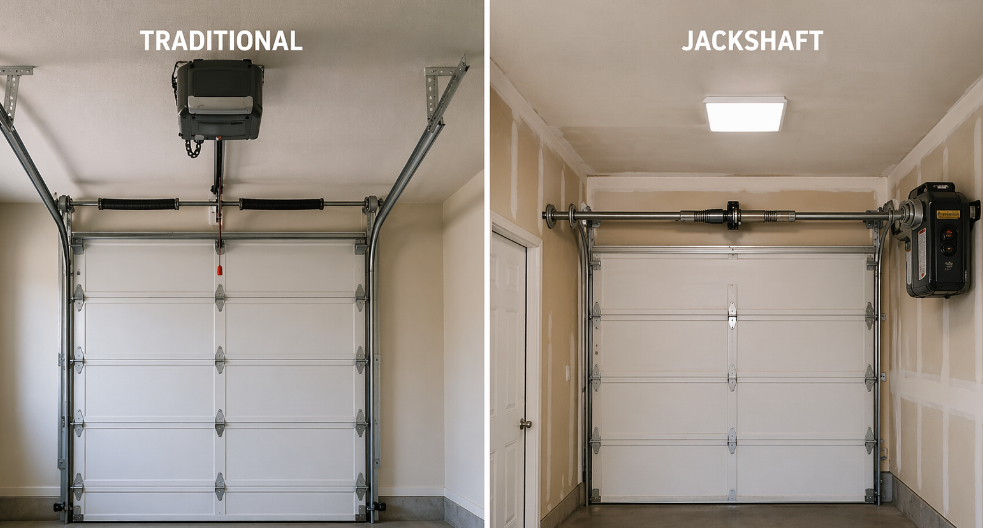
These are fundamentally different configurations.
Overhead trolley openers
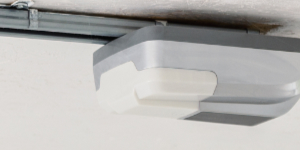
This is the most common residential setup. The opener is suspended from the ceiling, and the rail extends toward the header above the door. It is a practical, cost-effective solution for most standard garages.
Its main limitation is ceiling space. An overhead opener occupies room above the vehicle path and may conflict with storage, lighting layouts, or specialty ceiling use.
Side-mount or jackshaft openers
Jackshaft openers mount beside the garage door on the torsion shaft rather than overhead. Instead of pulling a trolley, they rotate the shaft directly to move the door.
These units are especially useful when ceiling space needs to be preserved, when the garage has high or obstructed ceilings, or when a cleaner look is desired. They can be an excellent solution, but they are not universal drop-in replacements. The door system needs to be compatible, the torsion setup must be correct, and installation precision matters. In most cases, jackshaft systems are an application-specific option rather than a default/standard install or replacement.
Smart Technology, Wi-Fi, and Battery Backup
Modern garage door openers are increasingly expected to do more than open and close.
Wi-Fi-enabled systems allow homeowners to monitor door status, receive activity alerts, and operate the door remotely through a mobile app. That can be useful for deliveries, family access, and confirming that the door was closed after leaving home.
Battery backup is another important feature, especially in areas where outages are a concern. It allows the opener to perform limited cycles when utility power is lost. For households that rely on the garage as a primary entry point, this is often more than a convenience feature.
Additional upgrades may include integrated LED lighting, motion-sensing wall consoles, automatic locking systems, exterior keypads, and vehicle-based control integration.
Choosing the Right Setup
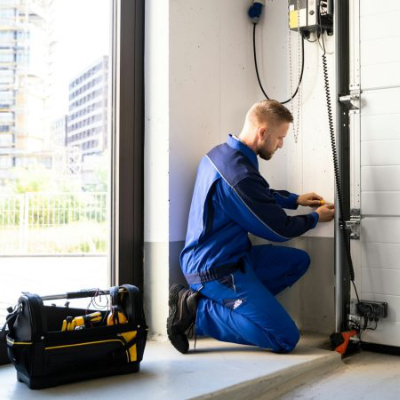
The best opener is the one that fits the door and the home. A light standard door in a detached garage may do perfectly well with a basic chain-drive system. An insulated double door beneath a bedroom usually benefits from a quieter belt-drive DC platform. A garage with limited ceiling clearance or a need for open overhead space may be a strong candidate for a side-mount operator.
For homeowners comparing options, the best approach is to match the opener to the actual door system, the garage layout, and the desired feature level rather than shopping by horsepower alone. A Better Garage Door provides garage door opener installation and service for multiple opener types, which is exactly the kind of application-specific approach that leads to a quieter, safer, and longer-lasting system.