Garage Door Steel Gauge Explained: Is 24-Gauge Better Than 25- or 26-Gauge?
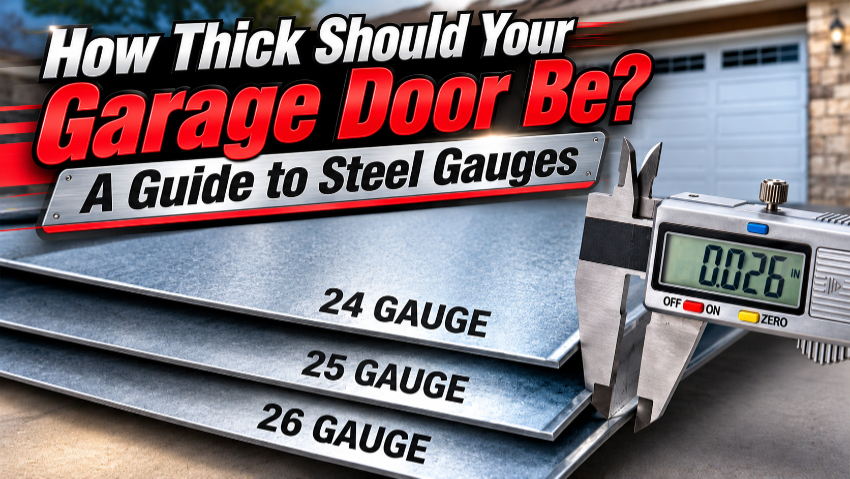
Steel gauge is one of the specifications homeowners encounter when comparing garage doors. A 24-gauge door may sit beside a 25- or 26-gauge option, often with different prices and construction details.
The basic rule is simple: the lower the gauge number, the thicker the steel. But gauge alone does not determine the quality, durability or performance of a garage door.
What Does Steel Gauge Mean?
Gauge is a traditional system for describing sheet-metal thickness. Unlike a direct measurement in inches or millimeters, the numbers run backward: 24-gauge steel is thicker than 25-gauge, and 25-gauge is thicker than 26-gauge.
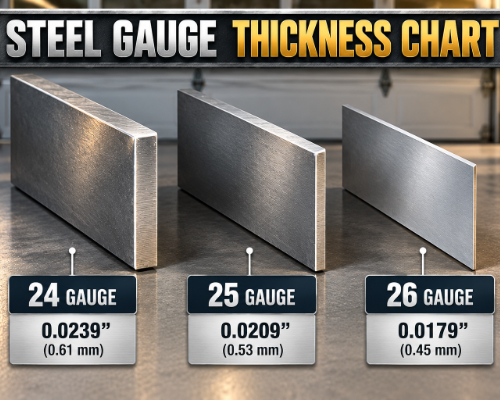
For standard sheet steel, commonly referenced nominal thicknesses are:
| Steel Gauge | Nominal Thickness |
|---|---|
| 24 gauge | 0.0239 in. |
| 25 gauge | 0.0209 in. |
| 26 gauge | 0.0179 in. |
Gauge is also material-specific, so the same gauge number does not necessarily represent the same thickness in steel, aluminum, and other metals. A sheet-steel gauge reference is useful for understanding the numbers, but when buying a garage door, the manufacturer's specifications should be the final reference.
What Do You Gain With Thicker Steel?

When two door sections have otherwise similar construction, a thicker exterior steel skin provides more material between the outside world and the interior of the panel. That can improve resistance to routine dents and deformation from incidental impacts.
That does not make a 24-gauge residential door impact-proof. Basketballs (we see this one ALL the time), vehicles, equipment and severe hail can damage steel panels of any gauge. Colorado homeowners concerned about storm damage may also want to review how to prepare a garage door for hail season to help mitigate potential damage.
Thicker steel also adds weight. Gauge is only one contributor, though. Door dimensions, insulation, windows, reinforcement, and decorative components all affect the overall weight. Our guide to factors affecting garage door weight explains those variables in much more detail if you're curious.
Why a 26-Gauge Door Can Still Be a High-Quality Door
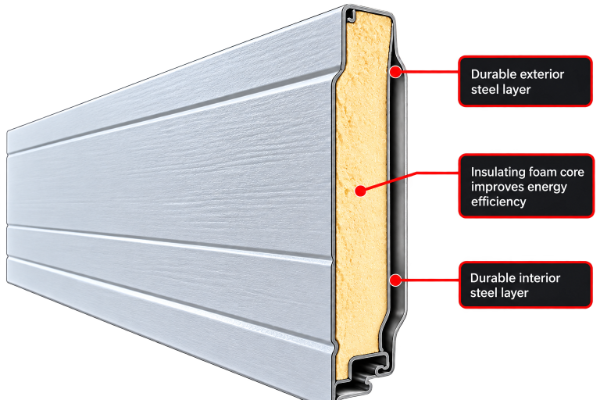
Steel thickness tells you about the steel skin. It does not describe everything behind it.
Residential garage doors may use single-layer, double-layer, or three-layer construction. A basic single-layer door may consist primarily of the exterior steel skin. An insulated door can combine steel with polystyrene or polyurethane, while a three-layer design adds an interior backing layer. That construction can substantially change how rigid and solid a door section is.
Insulation also affects something gauge cannot: thermal performance. If the garage is attached to the house, used as a workshop, or exposed to large Colorado temperature swings, compare insulation and section construction separately. A Better Garage Door's guide to energy-efficient garage doors covers single, double, and triple-layer designs in more detail.
American-Made Steel in Every A Better Garage Door Product
All A Better Garage Door steel doors are manufactured using American steel, giving homeowners local support, dependable quality, and consistent performance in Colorado’s climate.Call Now to Discuss Door Options
Is 24-Gauge Worth Paying More For?

It can be, particularly when the products being compared are otherwise similar.
A heavier exterior steel skin may appeal to homeowners who place a high priority on dent resistance or who expect the door to see frequent activity around the driveway. But paying more for 24-gauge steel does not automatically make sense if another door offers a construction package better suited to the garage.
When comparing models, look beyond the gauge number and check:
- Exterior steel gauge
- Single, double, or three-layer construction
- Insulation type and R-value
- Overall section thickness
- Interior backing material
- Reinforcement and hardware
- Paint or finish system
- Warranty coverage
These specifications answer different questions. Gauge tells you about steel thickness. R-value addresses insulation. Layer count and section design tell you more about how the panel is built.
24 vs. 25 vs. 26 Gauge: What Should You Buy?
If two similarly constructed doors are being compared, 24 gauge gives you thicker exterior steel than 25 or 26 gauge. Whether that difference is worth the additional cost depends on how much you value the heavier skin, mostly to protect against dents.
If the doors use different insulation, backing or section designs, compare the entire construction instead. A well-designed insulated door with thinner steel may provide benefits that a thicker single-layer door cannot.
Garage Door Steel Gauge FAQs
Not always. Thicker steel (like 24 gauge) can help with dent resistance, but overall door quality also depends on insulation, section design, hardware, and how well the door is installed. A well-built insulated door with thinner steel can outperform a basic 24-gauge single-layer door in many homes.
No steel gauge makes a door “dent-proof.” A 24-gauge skin can shrug off some minor dings better than thinner steel, but strong hail, basketballs, bikes and bumpers can still leave visible damage on any residential steel door.
No. R-value comes from the insulation material and section design, not the steel thickness. When energy efficiency matters, compare the insulation type (polystyrene vs. polyurethane), R-value, and total section thickness in addition to gauge.
Potentially, yes. Heavier sections usually mean heavier total door weight, and the springs, opener and hardware need to be sized for that weight. Your installer will match the spring system to the specific door model rather than just the gauge.
Yes—when it’s a quality product. Many residential doors use 25- or 26-gauge outer skins combined with foam insulation and a backing layer to create a very rigid, quiet section that performs well for daily open-close cycles.
Look at the whole package: steel gauge, number of layers, insulation type and R-value, section thickness, track and hardware quality, wind or impact ratings if applicable, finish system, and warranty. Gauge is just one line on the spec sheet.